



Locksmith Insurance

  • Insurance built for locksmiths, mobile locksmiths and security hardware contractors
  • Coverage options for residential, commercial, automotive and subcontracting work
  • Compare available options and receive documents once cover is arranged
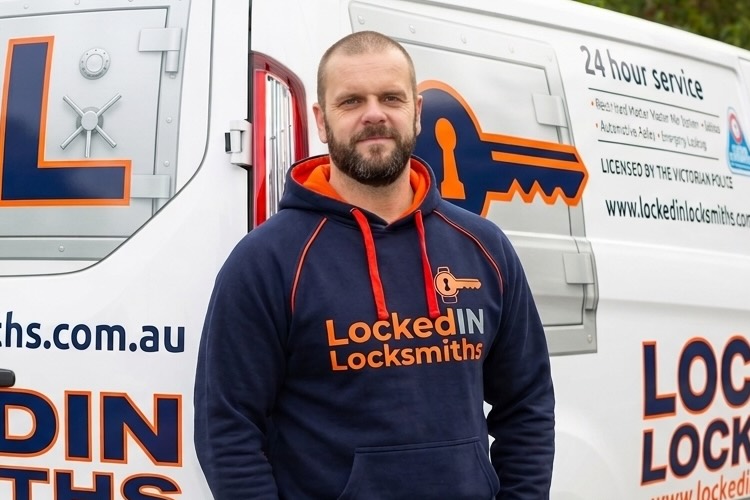
Insured male locksmith in front of his business vehicle

Contractor Specialists

20+ years of experience working with contractors

270k Businesses Covered

Trusted by businesses Australia-wide

All Policies, One Place

Cover from public liability to general property and beyond

Compare Options

And get documents fast once cover is arranged

Insurance broker pointing at a contractor professional indemnity insurance contract

What Is Locksmith Insurance?

Locksmith insurance is a general term for a range of insurance products that may be relevant to locksmiths, mobile locksmiths, safe technicians and security hardware businesses.

Depending on the cover arranged, insurance may assist with risks such as:

  • Third-party injury or property damage claims connected with locksmith work at homes, businesses, strata properties or vehicles.
  • Loss, theft or damage involving locksmith tools and equipment, such as key machines, lock picks, drills, access tools, programmers and diagnostic equipment.
  • Damage to portable trade equipment while it is being used, stored, loaded or transported between jobs, where covered by the policy.
  • Certain legal costs associated with covered claims.
  • Helping meet certain insurance requirements for commercial contracts, subcontractor agreements, real estate work, strata work or security industry licensing.

The cover available will depend on the policies selected, your business activities, insurer acceptance, policy limits, conditions and exclusions.

What Insurance Does a Locksmith Need?

Locksmiths manage risks involving property access, client security, tools, vehicles and work carried out at homes, offices, shops, warehouses and vehicles. Below are examples of cover types locksmiths commonly consider, depending on their work, contracts and business structure:

Public Liability

May cover claims for third-party injury or property damage caused by your locksmith work, such as damaging a customer’s door, frame, lock hardware, vehicle or surrounding property during a job.

General Property

May help cover locksmith tools and portable equipment for insured events such as theft or accidental damage, depending on where the items are kept, how they are secured, the cover selected and the policy terms, limits and exclusions.

Personal Accident

May provide a weekly benefit for certain injuries or illnesses that prevent you from working, subject to the policy terms, waiting periods, benefit periods, exclusions and limits. This may be considered by traders who do not have access to paid sick leave.

Professional Indemnity

May help respond to certain claims alleging financial loss caused by professional advice, security recommendations, designs or specifications you provide, subject to the policy terms, limits, conditions and exclusions.

Workers Compensation

May be required if you have employees, depending on your state or territory, business structure and worker arrangements. It may help cover certain wage and medical costs for eligible work-related injuries, subject to the relevant scheme, legislation and policy arrangements..

Tax Audit Insurance

May help cover certain professional fees incurred in responding to an eligible random ATO audit, review or investigation, subject to the policy terms, limits, conditions and exclusions.

Disclaimer: General information only. Cover options, limits, benefits and exclusions vary by insurer, policy wording and underwriting acceptance. Please review the relevant policy documents before deciding whether cover is suitable.

How Much Does Locksmith Insurance Cost?

The cost of locksmith insurance varies depending on the type of locksmith work you do, your turnover, who works with you, the locations you attend, the equipment you use, and the cover options selected. There is no single price. Insurers assess your business risk before calculating your premium.

What Affects Your Premium

Several factors can influence the cost of locksmith insurance. These may include the type of clients you service, whether you work on homes, vehicles or commercial sites, and the cover limits requested.

Type of Locksmith Work Residential locksmithing, commercial locksmithing, automotive lockout work, safe work, access control, emergency callouts and security hardware installation may carry different risk levels.
Annual Turnover Higher turnover can indicate more jobs, more site visits, more client interaction and greater exposure to possible claims.
Employees & Subcontractors Using apprentices, technicians, subcontractors or after-hours staff may change your risk profile and affect the premium.
Cover Types & Limits Public liability limits, tools cover, personal accident cover, professional indemnity and other selected options can influence the final cost.
Claims History Previous claims may affect pricing as insurers assess the likelihood and cost of future claims.

Comparing Cover Options

Locksmiths often compare different cover limits and policy types depending on their licensing requirements, commercial contracts, tools, vehicles, key systems and business structure.

Public Liability
$5M $10M $20M

Common Add-On Cover Options
Tools Cover Personal Accident Professional Indemnity

When comparing your options, consider:
  • Security licence, strata, real estate, commercial or subcontractor requirements
  • Whether you work on homes, vehicles, safes, commercial locks or access control systems
  • The value of your key machines, programmers, access tools, drills and portable equipment
  • Whether you store customer keys, access codes, restricted key systems or sensitive client information
  • Whether you employ staff, use apprentices or engage subcontractors

Premiums are subject to individual underwriting, insurer acceptance, and policy terms, conditions, limits, and exclusions.

Why Choose Contractor Cover?

  • Specialist contractor insurance: Cover options for contractors, subcontractors, and small businesses.
  • Online quotes and documents: Get a quote online and receive proof of insurance once cover is arranged and accepted.
  • Flexible Cover for Your Trade: Choose from available options for sole traders and small teams, based on your business activities and insurer criteria.
  • All policies in one place: Access a range of cover options in one place, including Public Liability, Tools Cover, Professional Indemnity, Personal Accident and more.
Contractor Cover insurance broker with a man in hi vis

State-by-State Insurance Requirements for Locksmiths

Locksmith licensing and insurance requirements vary across Australia. In many states, locksmith work is regulated under security industry laws, especially where the work involves locks, safes, access control, alarms, CCTV, commercial security systems or security advice.

Insurance requirements may also depend on licence conditions, commercial contracts, real estate work, strata work, subcontractor agreements, government tenders and client site access rules. Public Liability insurance is commonly requested, but the exact cover, limit and evidence required can vary.

Note: Requirements vary by state or territory, licence category, contract role, business structure and the type of locksmith or security work performed. This information is general only and should not be relied on as legal, licensing or compliance advice. Always check your licence conditions, client contracts and the relevant state or territory regulator before relying on this information.

In the ACT, people working in the security industry need a licence issued by Access Canberra. Locksmiths who provide security-related services should check whether their work falls under the ACT security licensing framework, especially if they provide security services through a business, work as an employee, or rely on an interstate licence under mutual recognition.

In NSW, locksmith work generally falls under the security licensing framework. A Class 2C Security Equipment Specialist licence authorises a person to sell, install, maintain, repair, service and advise on security equipment. NSW Police also states that this class allows the holder to work as a locksmith.

The Northern Territory security licensing framework is mainly focused on security officers, crowd controllers and security firms. Locksmiths should check whether their work involves regulated security services, such as guarding property, operating as a security firm, or working under a broader security services arrangement.

In Queensland, most locksmith work requires a security equipment installer licence. This can include installing, repairing, servicing or maintaining locks for commercial or residential areas, safes, vaults and access control devices. Queensland also states that vehicle access locksmith services for payment require a licence. Limited exemptions may apply, such as retail key cutting or installing basic security items during construction, repair or renovation.

In South Australia, locksmiths should check whether their work falls under security agent licensing. Security systems work can include providing advice on security alarm or surveillance systems, installing or maintaining those systems, and supplying people to provide those services. Employee-only licence categories may not authorise a person to run a business or subcontract in their own right.

Tasmania regulates security and investigation agent activities, including general guarding, monitoring room operation and other security-related work. Locksmiths should check whether their business activities fall within a regulated security licence activity, especially if the work moves beyond standard locksmith services into guarding, monitoring or broader security service arrangements.

In Victoria, private security licensing includes security equipment installer and security adviser activities. A security equipment installer is someone employed or retained to install, repair, service or maintain security equipment, including safes, vaults, alarms, security camera systems and access control devices. Private security business licence applicants may also need to provide Public Liability insurance certificates, and independent contractors carrying on security activities with an ABN may need both a business licence and an individual operator licence.

In Western Australia, locksmith-related work may fall under security installer and security consultant licence classes. WA Police lists installer classes for safes, vaults and prescribed locks, security alarms, CCTV, security doors and locks. Class 1 installer work involving safes, vaults and prescribed locks requires trade-qualified locksmith status, while Class 4 covers installing prescribed locks.

How to Get Locksmith Insurance

Arranging cover for your locksmith business is a straightforward process. Get a quote and receive your insurance documents once cover is arranged.

1

Provide Business Details

Complete our occupation selection form with details about your locksmith work, including your annual turnover, the number of staff you employ, and whether you provide residential, commercial, automotive or security hardware services.

2

Select Your Cover

Compare options for Public Liability, tool cover, Professional Indemnity and Personal Accident insurance. Choose the limits that may suit your contract, licensing or business requirements.

3

Receive Your Certificate

Confirm your details and complete payment. Once cover is accepted, your Certificate of Currency and policy documents will be emailed to you.

Fast online quotesInstant certificatesAustralian based supportCoverage for trades

Cover is subject to policy terms, conditions, exclusions, and insurer acceptance.

About Contractor Cover

Contractor Cover is the one-stop insurance shop for contractors across Australia.

We help contractors, subcontractors and small businesses compare commonly arranged business insurance options in one place. Choose from available cover types and limits based on your trade, business activities and contract requirements, subject to insurer acceptance, policy terms, conditions, limits and exclusions.

Call our team today at 1300 438 268 for more information or fill in our easy online quote form.

270k+ businesses covered

20+ years of experience

Contractor insurance specialists

Contractor Cover broker shaking a contractor's hand

Meet the Contractor Cover Team

At Contractor Cover, we’re proud to have a dedicated executive team that brings decades of experience, strategic insight, and an unwavering commitment to supporting Australian contractors.

John Elliott

John Elliott

Chief Executive Officer
View bio

John Elliott is the founder of Elliott Insurance Brokers, the business behind Contractor Cover. With nearly 20 years of insurance industry experience, John helps guide the business with a focus on practical cover, reliable service and clear support for Australian contractors.


Rachael Milne

Rachael Milne

Chief Financial Officer
View bio

Rachael Milne joined Elliott Insurance Brokers in 2012 and supports the systems, planning and financial structure behind Contractor Cover. Her work helps the business operate smoothly while supporting clear, reliable insurance services for contractors Australia-wide.

Kris Wright

Kris Wright

Head of Technology
View bio

Kris Wright supports Contractor Cover through technology, systems and process improvement. His work helps keep the online quote experience simple, organised and efficient, making it easier for contractors to compare cover options and access documents quickly.

Tim Stingers

Tim Stingers

Insurance Broking Team Leader
View bio

Tim Stingers brings more than a decade of insurance experience, with a strong focus on trades and construction. His knowledge helps support contractor-focused cover options for tradies, subcontractors and small construction businesses.

FAQs

There is no single national insurance requirement for all locksmiths. However, Public Liability insurance is commonly requested by commercial clients, real estate agencies, strata managers, government contracts and subcontractor arrangements. Some licence or business applications may also ask for proof of insurance.

Self-employed locksmiths often consider Public Liability, General Property, Personal Accident and Professional Indemnity, depending on their work. A mobile locksmith may also need to think about tools, key machines, vehicle-based equipment, client property damage risks and income protection if they cannot work due to injury or illness.

Public Liability insurance may respond if your locksmith work causes accidental damage to a customer’s property, such as a door, frame, lock, safe, vehicle or access hardware. Cover depends on the policy wording, the cause of the damage, exclusions, limits and any applicable excess.

Some locksmith policies may include automotive locksmith work, while others may treat it differently due to vehicle access, electronic keys, programming tools and possible damage to vehicles. If you provide car lockouts, transponder key work or vehicle access services, make sure this activity is disclosed when arranging cover.

No. Public Liability insurance is designed for third-party injury or property damage claims. Locksmith tools, key machines, programmers, drills and portable equipment are usually considered under General Property or tools cover. This may help with theft, loss or accidental damage, subject to the policy terms.

Cover for lost keys, restricted key systems, access codes or client security information depends on the policy. Locksmiths should check this carefully, especially if they manage master keys, digital access credentials, real estate keys, strata keys or commercial security records.

Professional Indemnity may be considered if you provide paid advice, security recommendations, lock system specifications, access control advice or written reports. It may respond to claims that your advice or professional service caused a client financial loss, subject to the policy wording.

Most policies do not simply pay to redo poor workmanship. They are more likely to respond to accidental damage, injury or covered claims arising from the work. For example, replacing a poorly fitted lock may not be covered, but accidental damage to a customer’s door may be considered under Public Liability.

If you employ staff, Workers Compensation is generally required under state or territory rules. If you use subcontractors, check whether your policy covers work performed under your business name or direction. Some contracts may also require subcontractors to hold their own insurance.

A Certificate of Currency is proof that your insurance policy is current and active. Locksmiths may be asked for this document before working with commercial clients, real estate agencies, strata managers, councils, builders, facility managers or subcontractor platforms.

You should review your insurance at least once a year, or when your business changes. This helps keep your cover aligned with your current work, equipment, contracts, staff and licensing requirements.

Common triggers include:

  • Adding automotive, safe, access control or commercial locksmith services
  • Buying new key machines, programmers or diagnostic equipment
  • Taking on real estate, strata or commercial contracts
  • Hiring employees, apprentices or subcontractors
  • Increasing turnover or expanding your service area

We take your privacy seriously. Your information is stored securely and used only to provide insurance services, issue documents, manage claims, or support your policy. You may view a copy of our full at any time, and we are happy to explain how your information is handled.

Have a question?

To get started with your business insurance, get an instant online quote for your occupation. If you can’t see your occupation or if you require specialist cover, contact our team today.

  • Quick quotes
  • Upgrading (and downgrading) your policies
  • Updating your contact and disclosure information
  • Cancellations
  • General advice & claims

Office Hours

Mon - Fri8:30am - 7:00pm WSTSat9:00am - 5:00pm WST

Email Us

info@contractorcover.com.au

Call us

1300 438 268

    Let's Get You to the Right Quote Form

    Different business types need different quote pathways. Choose the option that best fits the work you do.

    Contractor Cover

    Professional, Consultant
    or Other Contractor

    For consultants, IT contractors, project managers, designers, advisors and other non-trade professional services across a wide range of industries.

    Contractor Quote

    You will be directed to business.contractorcover.com.au

    All Trades Cover

    Trades, Builders,
    Mining or Industrial

    For trade-based businesses, builders, contractors, mining services, civil, construction, plant, installation, maintenance and industrial work.

    Trade Quote

    You will be directed to alltradescover.com.au/get-a-quote