


General Property Insurance

  • Cover for portable tools and equipment used on site, in transit, and on the move
  • Flexible cover options designed for contractors, subcontractors, and small businesses
  • Fast online quotes and instant documents, subject to policy terms
Man walking with a laptop covered by general property insurance through the city

Contractor Specialists

20+ years of experience working with contractors

270k Businesses Covered

Trusted by businesses Australia-wide

All Policies, One Place

Cover from public liability to general property and beyond

Compare Options

And get documents fast once cover is arranged

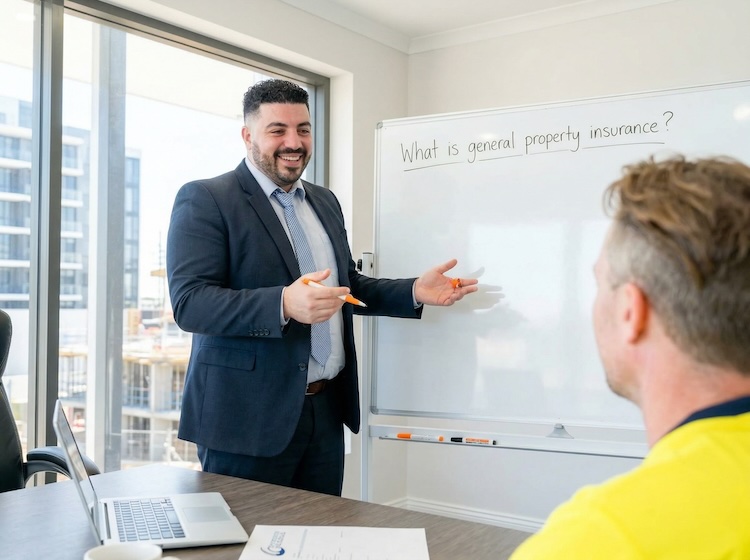
Contractor Cover explaining something to a contractor with "What is general property insurance?" written on a whiteboard

What Is General Property Insurance?

At its core, general property insurance protects items that are not fixed to a building and are used to generate income. Depending on your policy, this may include:

  • Tools and trade equipment
  • Portable machinery
  • Laptops, tablets, and phones used for work
  • Diagnostic or specialist equipment
  • Cameras or technical devices
  • Some business stock or contents (depending on the policy)

Unlike standard business property insurance, which focuses on buildings or fixed contents, general property insurance is designed for items that move with you.

What Does General Property Insurance Cover?

Depending on your policy, your coverage may include:

Theft of tools and equipment

Cover may apply if insured tools or portable equipment are stolen from a locked vehicle, secure worksite, or approved storage location, subject to policy terms and security requirements.

Accidental damage

If a covered item is dropped, knocked, cracked, or otherwise accidentally damaged during normal business use, general property insurance may help with repair or replacement costs.

Portable electronic items

Policies can often extend to laptops, tablets, mobile phones, diagnostic devices, cameras, and other portable electronic equipment used for business, especially where specified on the policy.

Cover away from your premises

This insurance is designed for items that move with you, so cover can apply while equipment is being used on site, transported between jobs, or kept temporarily off-site.

Specified high-value items

Higher-value gear such as laser levels, survey equipment, cameras, or specialist trade tools can often be listed individually so they are not limited by standard per-item caps.

Business contents and stock

Depending on the insurer and policy type, general property insurance may also extend to certain business contents, stock, or mobile assets used as part of your day-to-day operations.

Repair or replacement costs

When an insured item is damaged, lost, or stolen, the policy may respond by covering the cost to repair it or replace it, helping reduce disruption to your business.

Optional cover extensions

Some policies can be tailored with broader protection such as accidental damage upgrades, wider theft cover, flood-related options, or cover that applies overseas or worldwide.

What Does It Not Cover?

General property does not cover every type of loss or situation. Understanding the common exclusions helps avoid gaps in cover.

Your policy typically does not include:

  • General use and deterioration: Gradual damage from everyday use is not covered
  • Rust, corrosion, or ageing: Natural decline of equipment over time is excluded
  • Lack of maintenance: Damage caused by not properly maintaining tools or equipment

This type of insurance is for sudden and unexpected events, not ongoing wear.

  • Internal faults: Equipment failing due to internal defects or breakdown
  • Motor burnout or failure: Machinery or tools stopping due to mechanical issues
  • Electrical issues: Faults not caused by an insured event

Breakdown-related issues are usually covered under specialised equipment or machinery policies.

  • Buildings and premises: Workshops, offices, or permanent structures
  • Fixed installations: Items that are not portable or designed to be moved

General property insurance is for portable items only. Fixed assets are usually covered under property or business pack insurance.

  • Cars, utes, and trucks: Registered vehicles are not covered
  • Trailers requiring registration: May require separate cover
  • Mobile plant: Larger machinery may need a different policy

Vehicle-related risks are typically covered under motor or plant insurance policies.

  • Deliberate damage: Loss caused intentionally by you or someone acting on your behalf
  • Illegal use: Claims arising from unlawful activity

Insurance is designed for accidental and unforeseen events, not intentional acts.

  • Unspecified high-value items: Equipment exceeding per-item limits
  • Incorrect values: Items insured for less than their replacement cost

High-value tools and equipment often need to be listed individually to ensure full cover.

  • Flood or water damage: May require an optional extension
  • Worldwide or interstate cover: Not always included automatically
  • Open-air theft: Theft without forced entry may be limited or excluded

These types of risks are sometimes available as optional extras, depending on the policy.

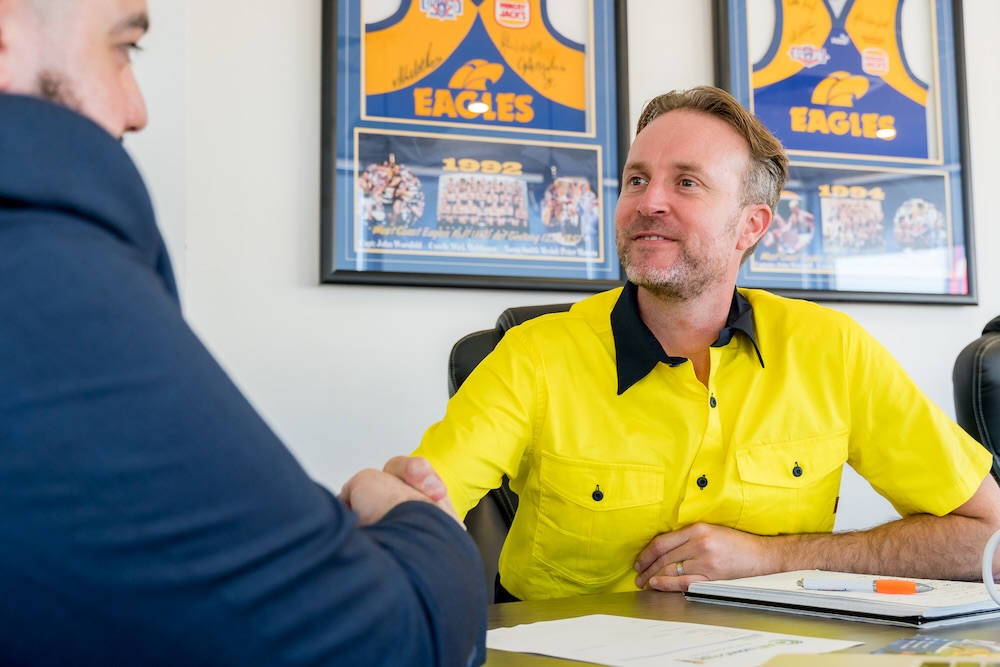
Contractor wearing hi vis shaking a Contractor Cover broker's hand

Why Choose Us?

We know contractors need reliable cover without the hassle. That is why over 270,000 Aussie small businesses trust us.

  • Specialist contractor insurance: Cover tailored specifically for contractors, subcontractors, and small businesses.
  • Fast quotes and instant documents: Get covered online in minutes and receive proof of insurance immediately, subject to policy terms.
  • Only pay for what you need: Flexible options designed to suit sole traders and small teams.
  • All policies in one place: Public Liability, Tools Cover, Professional Indemnity, Personal Accident and more.

How Much Does General Property Insurance Cost?

General property insurance is usually priced around the value, type, and portability of the business items you want to cover. Instead of one flat price, premiums are shaped by how exposed your gear is to theft, accidental damage, off-site use, and whether higher-value items need to be specified separately.

What Affects the Cost of General Property Insurance?

For this type of cover, insurers usually focus less on your turnover and more on the value and risk profile of the portable assets themselves. The more expensive, mobile, theft-prone, or specialised your business gear is, the more it can influence pricing.

Total replacement value The more portable tools, devices, and business items you include, the more your premium is likely to increase.
Type of equipment insured Items like laptops, cameras, test equipment, and specialist electronics can carry a different risk profile from standard hand tools.
Where items are used and stored Gear carried between job sites, left in vehicles, or stored away from a fixed premises may be seen as higher risk.
Specified vs unspecified items Higher-value gear listed individually may be priced differently from lower-value items insured under one overall sum insured.
Claims history Previous losses or claims can affect how insurers assess your future risk and may impact pricing.
Broader policy features Optional extensions for wider theft cover, accidental damage, or interstate and overseas use can increase the cost of cover.

How Much Cover Do Businesses Usually Choose?

General property insurance levels are usually based on the replacement value of the portable business items you rely on. A small sole trader toolkit may need a much lower sum insured than a contractor carrying specialist equipment across multiple sites.

$5,000 cover

Often chosen by sole traders or smaller operators with a basic set of essential tools and portable items.

  • Entry-level toolkits
  • Lower-value portable items
  • Smaller replacement exposure

$50,000+ cover

More common where businesses carry specialist, high-value, or individually specified equipment.

  • Specialist diagnostic gear
  • Expensive electronic equipment
  • Large portable asset schedules
Important note

The right level of general property insurance is usually based on the current replacement value of your portable business assets, not what you originally paid for them. It is also worth checking whether any high-value items need to be specified separately rather than relying on standard per-item limits.

Premiums are subject to underwriting, insurer acceptance, and the terms, conditions, limits, and exclusions of the policy.

Who Needs General Property Insurance?

General property insurance is most relevant for contractors, tradies, and small businesses that rely on portable tools, equipment, and other work items away from a fixed premises. If you carry gear to job sites, transport it in your vehicle, or use equipment that would be expensive to replace, this is the type of cover most people look at.

It is most commonly needed in the following situations:

If you work across different sites, properties, or customer locations, your gear is exposed to more risk than equipment that stays in one workshop or office.

This is common for:

  • carpenters
  • electricians
  • plumbers
  • painters
  • landscapers
  • handymen
  • installers
  • flooring contractors

The more often your tools are packed, moved, unloaded, and used on site, the more relevant general property insurance becomes.

Many contractors keep tools and portable equipment in their vehicle between jobs, overnight, or while travelling from one site to another.

This can be relevant if you:

  • carry tools in a locked ute or van
  • transport portable machinery between jobs
  • keep equipment in a trailer
  • leave site gear in your vehicle during the workday
  • move between multiple jobs in a single day

For many tradies, the vehicle is effectively part of the workplace, which is why tool and equipment cover is often considered alongside liability cover.

If your ability to work depends on equipment you have paid for yourself, replacing it after theft or damage can be a major cost.

This is especially relevant for:

  • sole traders
  • subcontractors
  • self-employed tradies
  • contractors building up their own toolkit
  • small operators without backup equipment

If one stolen or damaged item would stop you from taking on work, general property insurance may be worth considering.

This cover is not only for tradies with toolkits. It can also be relevant if your business relies on portable electronic or specialist equipment used away from a fixed base.

This may include:

  • laptops and tablets used for work
  • diagnostic tools
  • testing equipment
  • laser levels
  • cameras
  • surveying equipment
  • specialist mobile devices

That makes general property insurance relevant not just for hands-on trades, but also for mobile consultants, technicians, and service-based contractors.

Subcontractors are often responsible for supplying and protecting their own equipment, even when working under someone else’s project or supervision.

This commonly applies where you:

  • bring your own tools to each site
  • work under a builder or head contractor
  • move between projects regularly
  • are responsible for your own gear and setup
  • need to keep working without delay if equipment is lost

Even when it is not specifically required under contract, subcontractors often arrange this cover because downtime can affect both income and site commitments.

A good way to assess whether this cover is relevant is to ask what would happen if your main tools or portable business items were lost tomorrow.

This cover is often considered where:

  • replacing equipment would be expensive
  • downtime would mean lost income
  • jobs would need to be postponed
  • you do not have spare gear available
  • you rely on a few key items every day

For many small operators, the biggest issue is not just the replacement cost. It is the disruption to work, cash flow, and client commitments.

How to Get General Property Insurance

Getting cover for your tools, equipment, and portable business items is straightforward. Here’s how to compare options, arrange cover, and receive your documents quickly.

1

Tell Us What You Need To Cover

Complete our short online form with details about your business, the type of tools or equipment you use, and the value of the portable items you want to insure.

2

Review Your Cover Options

Compare cover levels based on your equipment values, whether higher-value items need to be specified, and how your gear is used, stored, or transported.

3

Arrange Cover And Receive Documents

Once your policy is arranged, your insurance documents can be issued so you have confirmation of cover for your tools, equipment, and portable business assets.

Fast online quotes Instant documents Flexible cover options Designed for contractors

Cover subject to policy terms, conditions, exclusions, and insurer acceptance.

Contractor Cover broker shaking a contractor's hand

About Contractor Cover

Contractor Cover broker shaking a contractor's hand

Contractor Cover is the one-stop insurance shop for contractors across Australia.

We understand that contractors require targeted business insurance which offers both value for money and optimal cover. With that in mind, we’ve packaged the most common insurances the average contractor needs into a single policy. This means that you don’t need to waste your time contending with multiple policies – everything you need is included in one convenient package.

Call our team today at 1300 438 268 for more information or fill in our easy online quote form.

270k+ businesses covered

20+ years of experience

Contractor insurance specialists

Meet Our Contractor Insurance Experts

At Contractor Cover, we’re proud to have a dedicated executive team that brings decades of experience, strategic insight, and an unwavering commitment to supporting Australian contractors. 

John Elliott

CEO

Rachael Milne

Chief Financial Officer

Kristofer Wright

Head of Technology

Tim Stingers

Insurance Broking Team Leader

FAQs

Yes. It is commonly referred to as tools insurance or portable equipment insurance, depending on the insurer.

It depends on your situation. Many contractors consider it because their tools are essential to their work.

No. It is not generally required by law, but it may be requested under contracts or site requirements.

Yes. Sole traders and individuals can take out cover for tools and equipment used for work.

In many cases, yes. Eligibility depends on the insurer and how the equipment is used.

It often covers tools in a locked vehicle or toolbox. Conditions and limits apply.

Cover may apply depending on security and policy terms. Some situations require additional protection.

Yes, if included in your policy. Some items may need to be listed individually.

No. General wear and tear is not covered.

In many cases, it may be considered a business expense. You should confirm with your accountant.

Some policies offer worldwide cover. Check your policy details.

We take your privacy seriously. Your information is stored securely and used only to provide insurance services, issue documents, manage claims, or support your policy. You may view a copy of our full privacy policy at any time, and we are happy to explain how your information is handled.